Daredevils and Dreamers
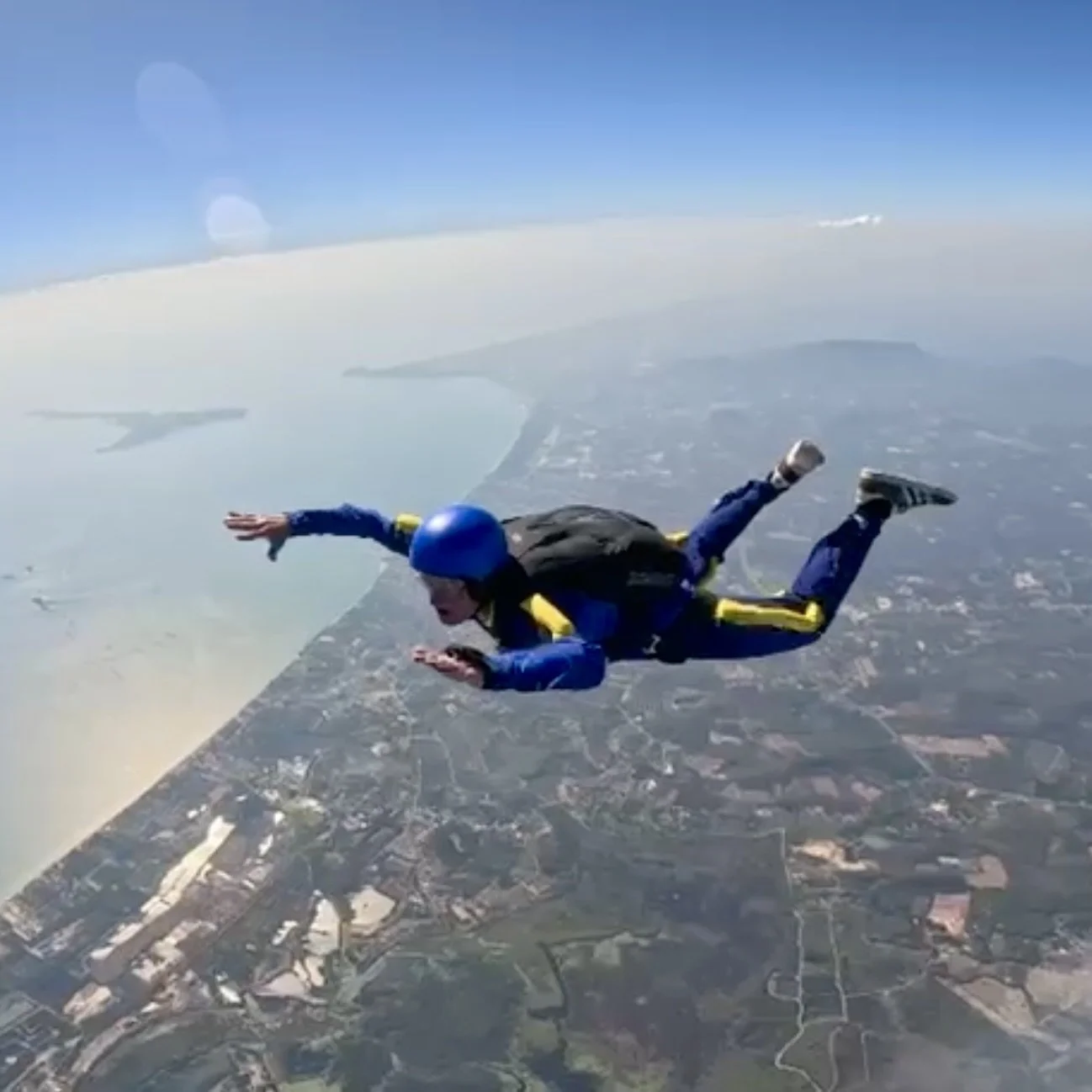
“Drop ZoneThailand,” south of Bangkok.
A year ago, my husband JB started jumping out of airplanes. Several tandem paragliding experiences served as the “gateway drug” to a tandem skydive. He was instantly hooked. Unfortunately, France doesn’t allow 66-year-olds to obtain a license to jump independently. Undeterred, JB entered a USPA* certified program in Thailand that accepted “SOS” jumpers: a disturbing acronym for “skydivers over sixty.” Twelve months and 35 jumps later, he earned his Class A license. Beginning an extreme sport at his age, begs the question: is it evidence of unresolved issues, a mid-life crisis, or just another milestone in a lifetime of calculated risks?
Likely all the above. Always a bit daring and willing to take risks, JB bought his first of many motorcycles at 16; performed aerobatic flight maneuvers in an open-cockpit biplane before he could drive a car; and bought his first property with a costly developer’s loan at 22. I, on the other hand, recoil from risk. I have no need for speed, heights, or risky business. My daring lies in the arena of building human connection: friendships, mentorships, and partnerships. Fortuitously, our combination of skills has proven indispensable in our shared adventure as retired expats. Afterall, the choice to leave behind a safe and comfortable life in the US was at best risky and worst case, might have proven ruinous.
“Courage is the price that life exacts for granting peace.” Amelia Earheart
Luckily, our gamble paid off; Pau has proven to be a great fit. We are thriving in its natural beauty, rich culture, and layered history—one with a unique aeronautical twist. Pau boasts the world’s first aviation school, L’Aeroclub du Béarn, established in 1908.(1) It is also home to ETAP (École des Troupes Aéroportées), a military school that trains paratroopers, officers, and enlisted personnel of the French armed forces and national guard.(2) Many companies, university programs, and consultants associated with the aerospace industry thrive in this region. However, none of these ventures might ever have taken flight (pardon the pun) if not for a pair of exemplar risk-takers: Wilbur and Orville Wright.
At the dawn of the 20th century, Pau was dubbed “the hub of the sporting world" for its mild climate, proximity to the Pyréneés Mountains, and wide variety of outdoor activities—golf, polo, tennis, fox hunting, salmon fishing, mountain hunting, and hot air ballooning—all of which attracted international tourism.(3) Because ballooning technology was pioneered here in the 1800’s by the Tissandier family (wealthy Parisians who had a summer home near Pau), the city also gained recognition as a place where “science and finance were closely intertwined.”(4) In 1909, that mix of attributes lured the inventors of the 1903 “Wright Flyer” to Pau. They were already in Le Mans, France securing finances for commercial production of their plane after failing to find backers in the US or Paris. When the Wright brothers arrived in Pau, the mayor established an airfield and built a hanger for the “Flyer.” Embraced and celebrated by the local population, the brothers performed the first airplane flight in the Béarn region that February.(5) Soon after, they established L’Aeroclub du Béarn, with the help of Paul Tissandier.(6)
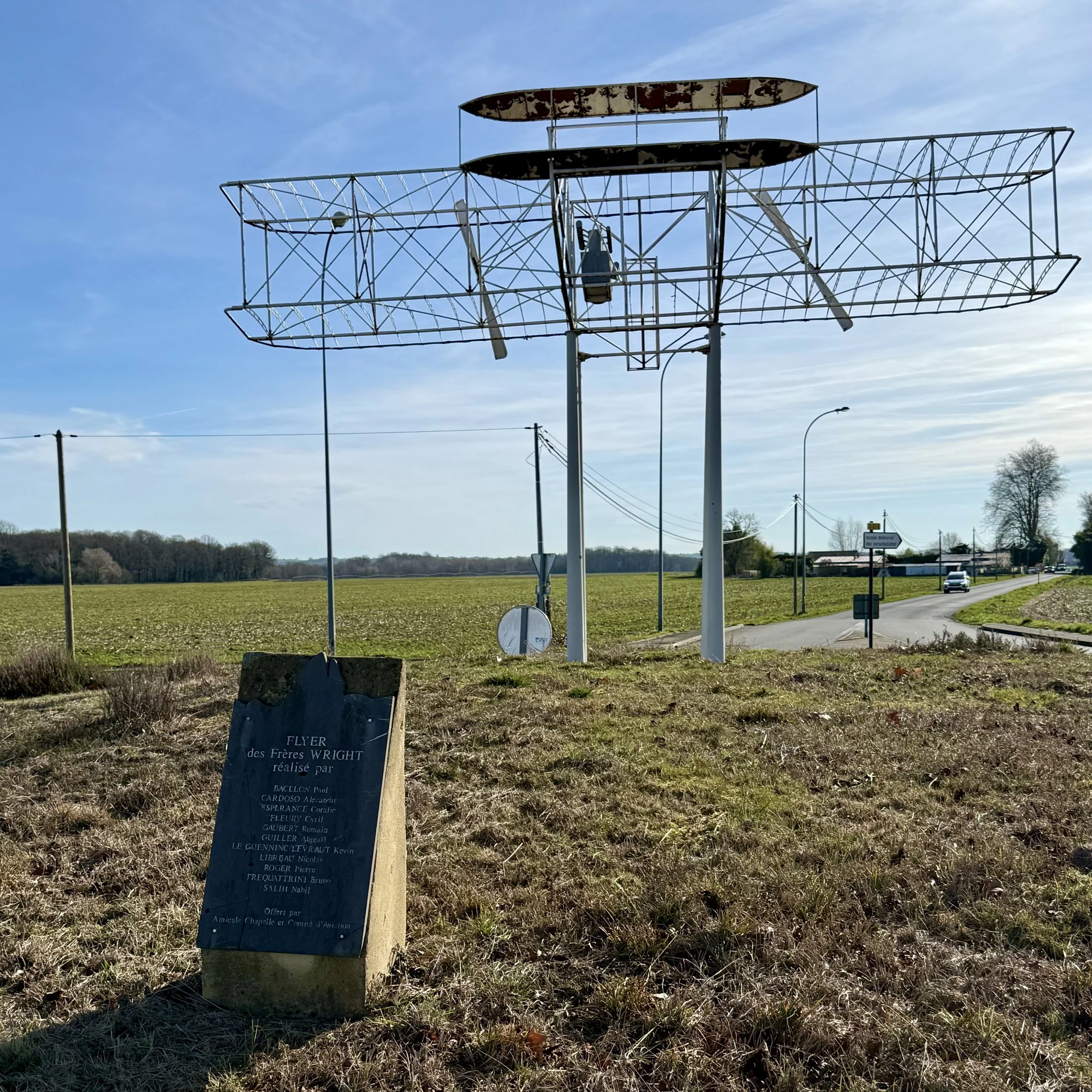
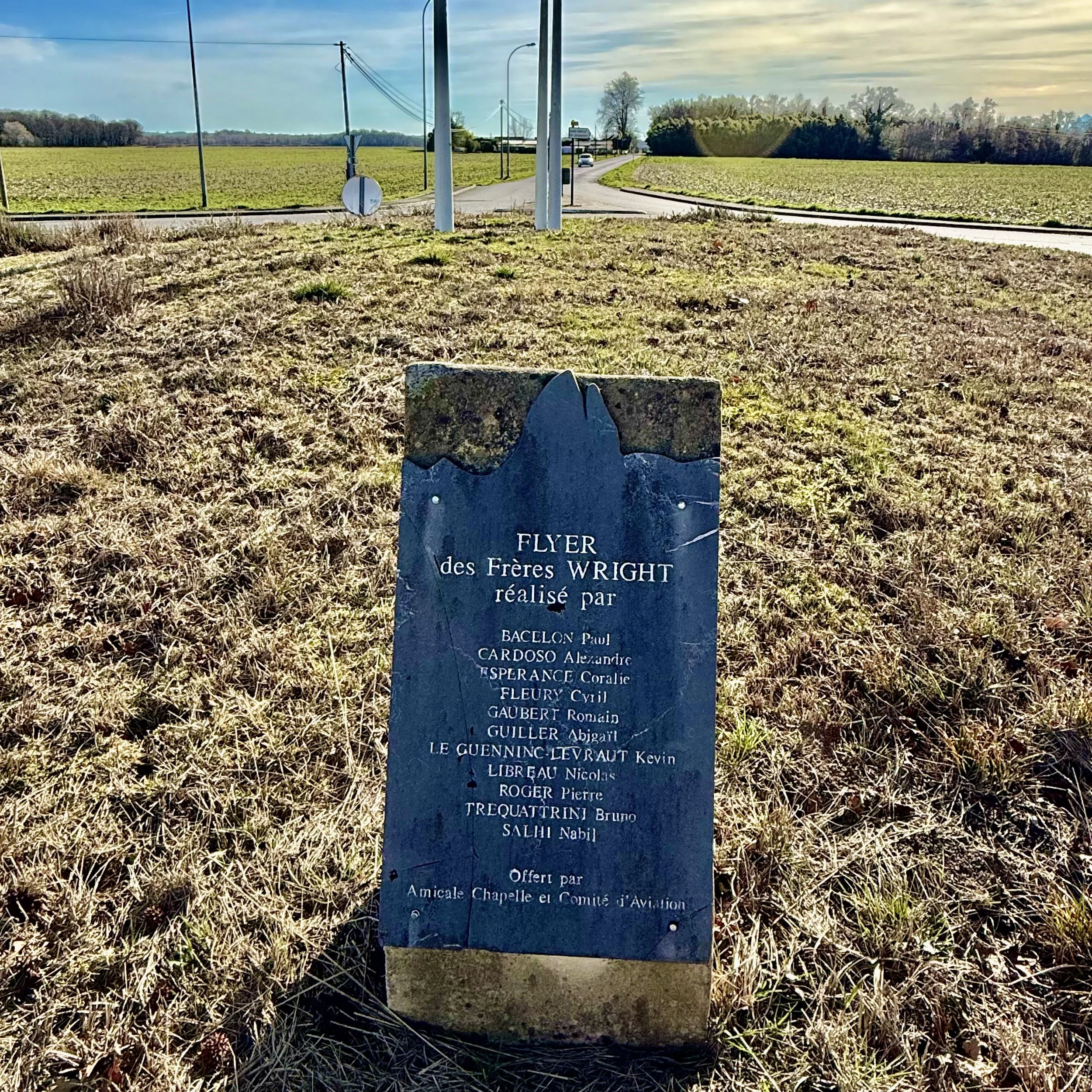
A replica of the Wright Flyer stands on the rotary leading to Pau Pyrénées Airport. It was created to honor the Wright Brothers by the Amicale de la Chapelle Mémorial de l’Aviation (Aviation Memorial Chapel Association) and the Comité d’Aviation (Aviation Committee); non-profit organizations dedicated to preserving the city’s aviation history.
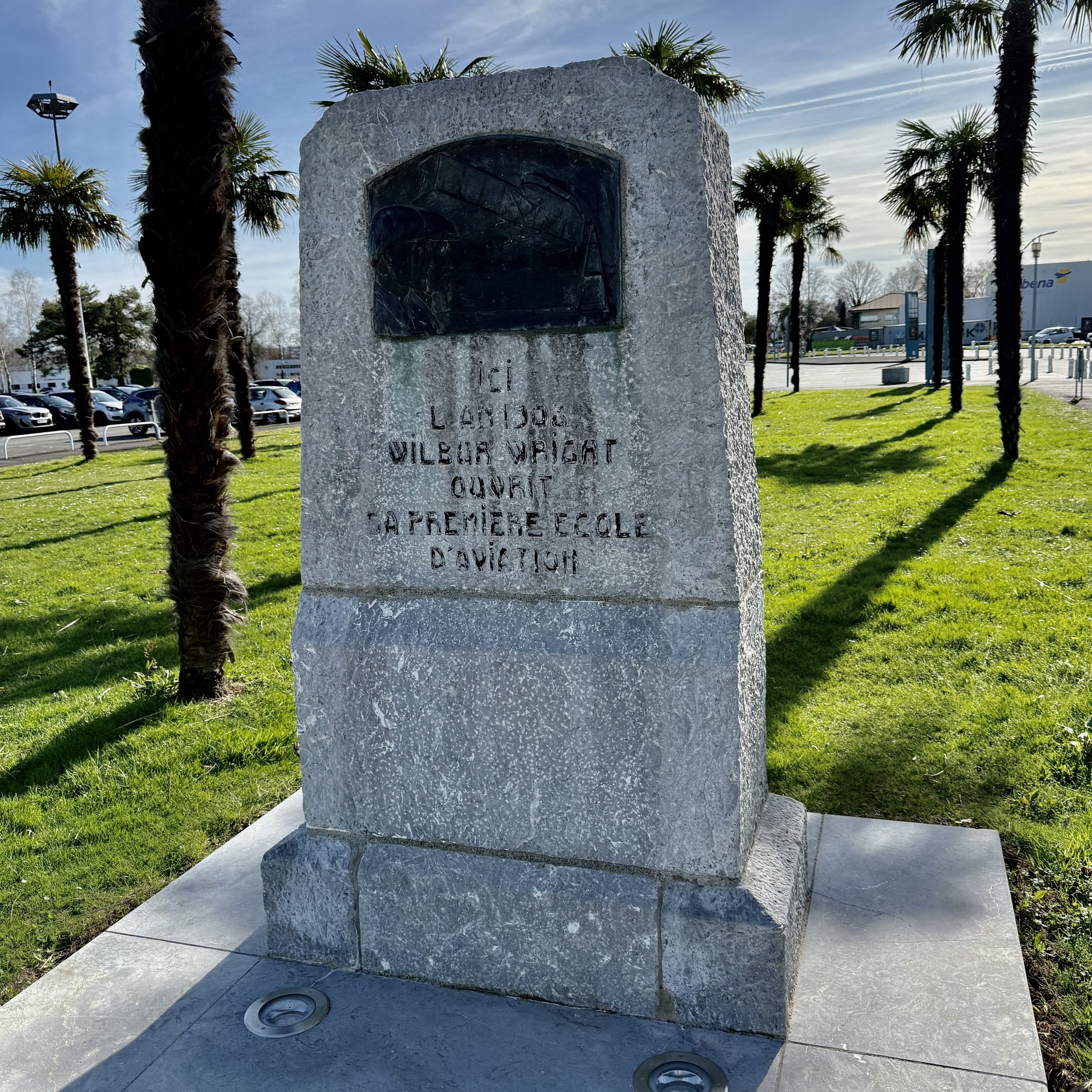
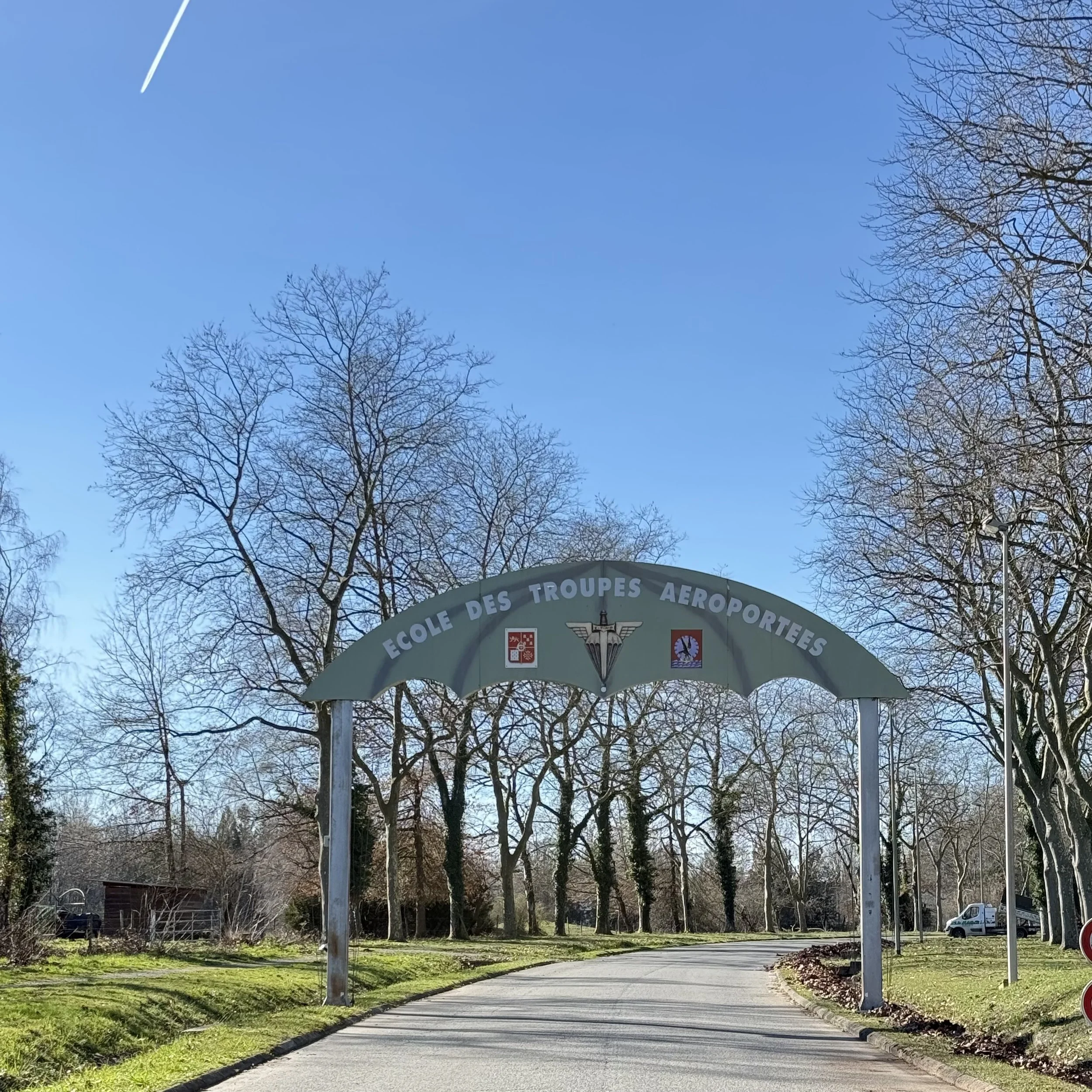
Left: A monument to the Wright Brothers was errected at the entrance to the airport terminals to commemorate where the worlds’s first aviation school, L’Aeroclub du Béarn, was established. The airport grounds were originally known as “Pont Long Aerodrome.” Right: Entrance to ETAP military training school.
The inspirational story of the Wright brothers, and JB’s newest madcap avocation, had me wondering what makes risk-takers tick. What drives them to jump out of airplanes, climb treacherous mountains, or careen around racetracks at G-force speeds? What compels mere mortals to choose the vocation of bomb technician, firefighter, or war correspondent? What inspires dreamers to dedicate a lifetime to scientific discovery or invention? Are they all fearless and brave or delusional and naïve?
“It is not the mountain we conquer but ourselves.”
Sir Edmund Hilary
Truthfully, the desire and willingness to take risks is a complex issue. Many scientific studies have explored possible links between risk-taking personality traits and psychopathology, adventurism, and heroism.(7) Lived experiences can also be a catalyst. Patterns of risky behavior “can develop during childhood, emerge following traumatic experiences or serve as defense mechanisms against emotional vulnerability.”(8)
JB is aware of his own pathology: the unfortunate motivation of proving himself to a brilliant, but abusive and alcoholic father. The highly respected journalist, Anderson Cooper also acknowledges a connection between trauma and risk-taking. He admits that not grieving his father’s sudden death as a child, and later his brother’s suicide, became a “rocket fuel of anger, rage, and heartbreak” that helped propel him to war zones around the world.(9) When asked if he was ever afraid, Cooper responded: “Anyone who says they're not scared is a fool, or a liar, or both…I don't think I was naïve, I just didn't allow fear to stop me from going to a place…I prefer to face it dead on and get over it.”(10)
Regardless of personality or experience, studies show that many risk-takers are drawn to an adrenaline rush and the heightened focus its mental “flow state” offers. However, successful “daredevils” are not fearless; rather they recognize, manage, learn from, and use their fear. Canadian Will Gadd, former paragliding world distance record holder, X-Games ice climbing champion, and first person to ice climb Niagara Falls advocates that, “if you are anxious and afraid, it is not a cue to push harder, it’s a cue to get your mind in order; figure out why you’re anxious, why you’re afraid, what you can do about it. Then you can act not with just fake confidence, but with deep seated competence, and that is what I really value: competence.”(11) JB shares that perspective and has demonstrated it in his approach to skydiving. Though he admits to feeling fear, it is not paralytic because he knows the risk has been managed and mitigated by hours of study, training, observation, and visualization.
“There are no gains without pain.” Benjamin Franklin
Some risk-takers must balance psychological and physical discomfort. A 2008 study by Carla Willig, professor of psychology at City University of London, determined that extreme athletes are not merely drawn to these sports as “a vehicle for self-destruction or a symptom of unresolved psychic conflicts.” Instead, “participants are very much aware of these risks and…that the possibility of suffering is a necessary dimension of the experience.”(12) I believe JB finds pleasure in skydiving, despite its fear factor, because he has developed what he calls “the ability to live on the hairy edge of discomfort.” This capacity likely began during his traumatic childhood and was then honed by training and competing internationally in marathons for three decades. To achieve personal bests and podium finishes, he learned to accept the risk of physical pain and failure. That ability also proved essential for his mid-life transition from marathons to cycling. He now climbs local mountain cols (passes) ranked by the Tour de France as the most difficult “Hors Catégorie;” literally “beyond categorization.” He also manages the mental stress of their twisting steep descents. Theses endeavors fall into my personal definition of “extreme sport.”
“The only people who never tumble are those who never mount the high wire.” Oprah Winfrey
The titans of business and invention often experience fear and manage risk similarly to physical thrill-seekers. Multi-billionaire, and “serial entrepreneur,” Mark Cuban admits: “I hate risk. I’m terrified of it.”(13) He mitigates risk with preparation and claims to be “relentless about learning” everything possible concerning the industries in which he invests. Ariana Huffington, founder of the progressive news website HUFFPOST, elevates risk-taking to the extreme:“failure is not the opposite of success — it is the steppingstone to success…perhaps the most important lesson for entrepreneurs.”(14) Creative genius and inventor Steve Jobs cautioned that “without genuine passion for the problem you are solving, most people quit when it gets painful.”(15) However, he clarified that “passion is not motivation; it is endurance. It is what carries founders through the moments when logic says stop, but belief says continue.”(16) I experienced the truth of this when I left a secure corporate life and undertook the pressures and uncertainty of establishing my own custom window treatment business. Though I never regretted the leap, there were definitely times when my original passion was challenged.
“Only those who will risk going too far can possibly find out how far one can go.” T. S. Eliot
Unfortunately, this probe into the psyche of risk-takers has not alleviated my discomfort with JB’s skydiving. But I have gained a better understanding of what daredevils and dreamers can teach us. The Wright brothers sacrificed everything—personal relationships, physical safety, and financial security—to make their vision of commercial aviation a reality. They persisted despite rejections and doubts at home and abroad. They withstood attacks on their integrity; the Parisian press decried them either “fliers or liars.”17 After a decade of risk, pain, and near failure, the Wright brothers succeeded because they had the “genuine passion” to push through “the moments when logic says stop, but belief says continue.”18
Though my husband doesn’t rank in the same risk-taking stratosphere as the legendary brothers, I admire and deeply respect his willingness to push himself (and me on occasion) to face fears and take risks—both large and small. Without his tenacity, we wouldn’t have this challenging, but inspiring life in Pau. Hopefully, in the spirit of the Wright brothers, we are both proving to be worthy “fliers” in the rarified air of our expat life.
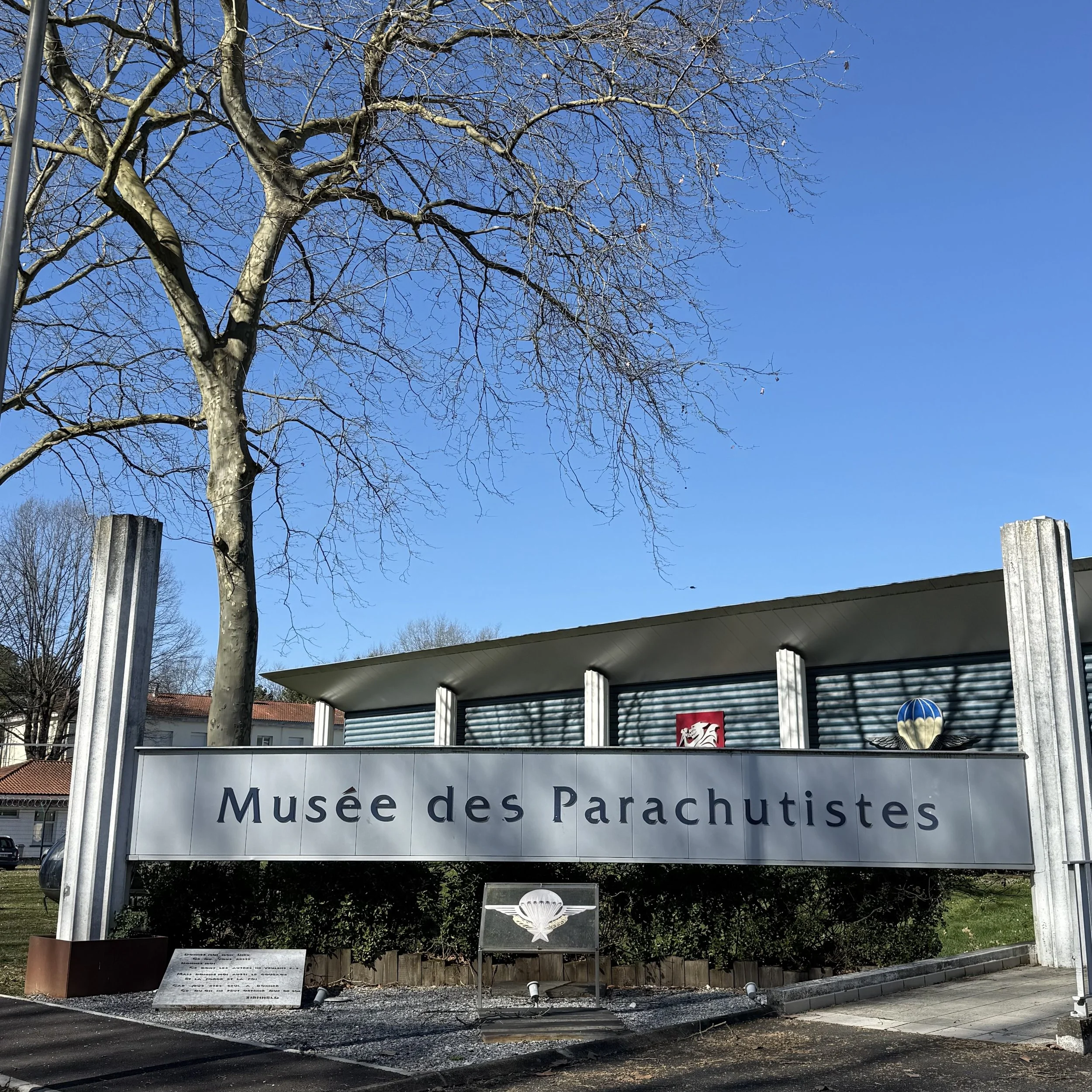
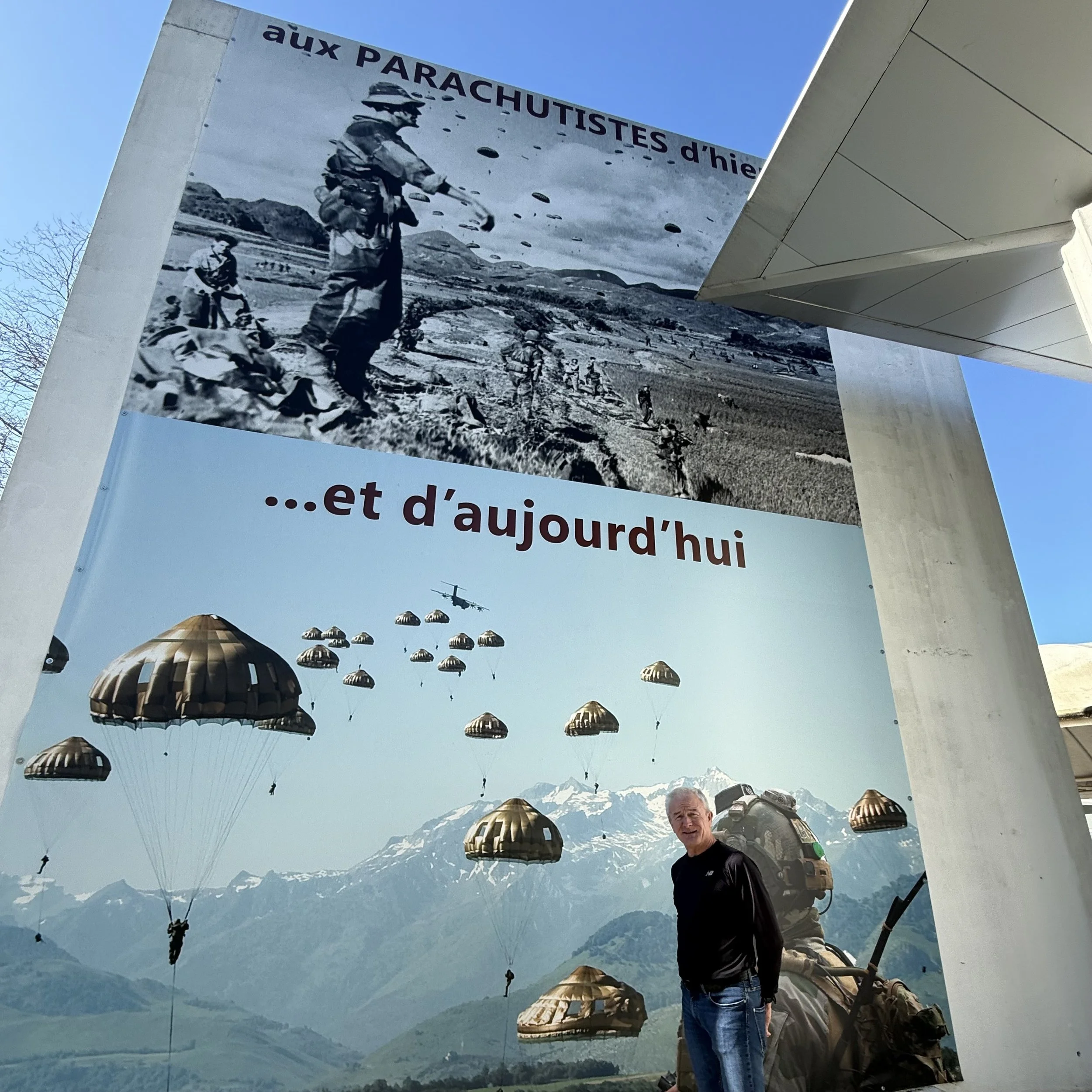
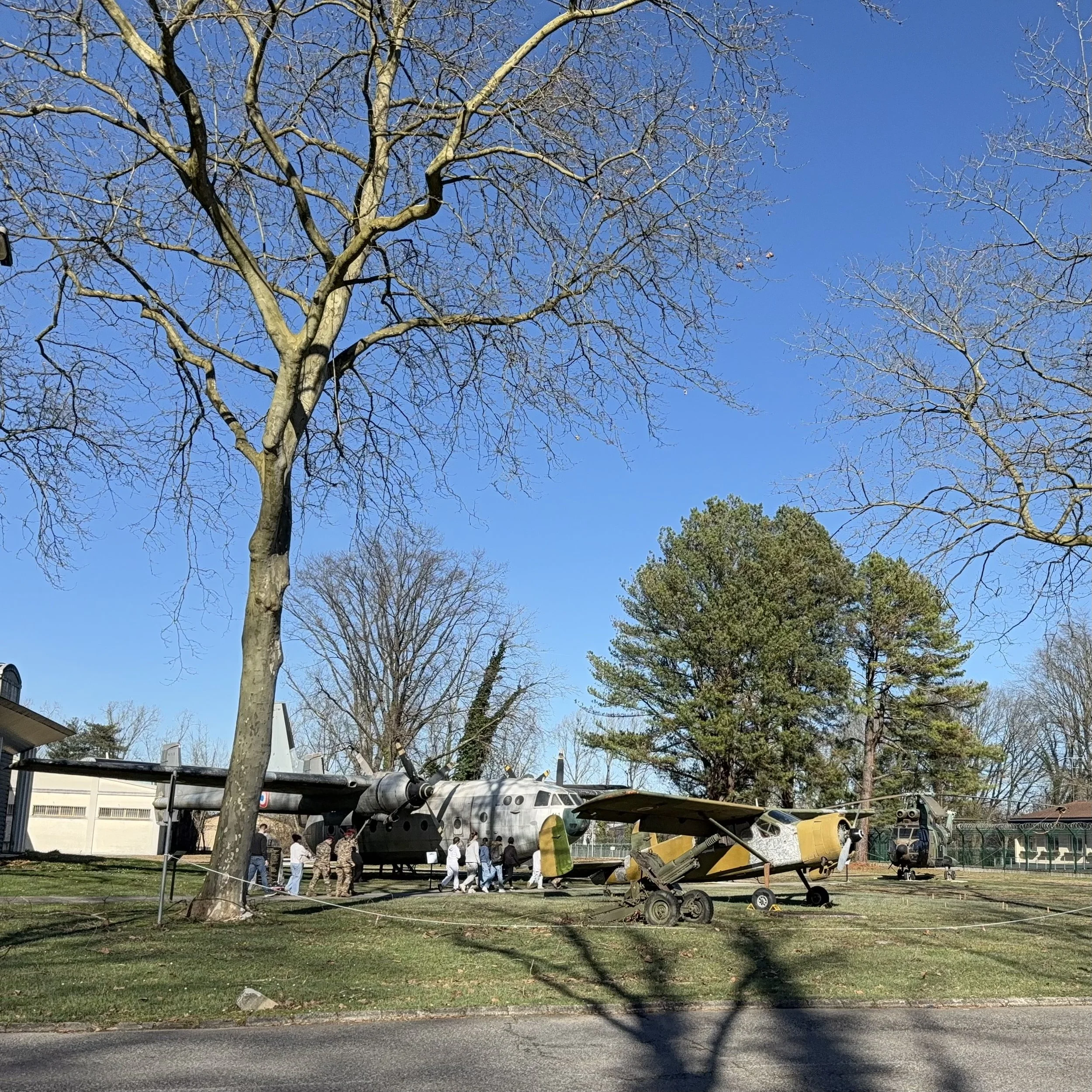
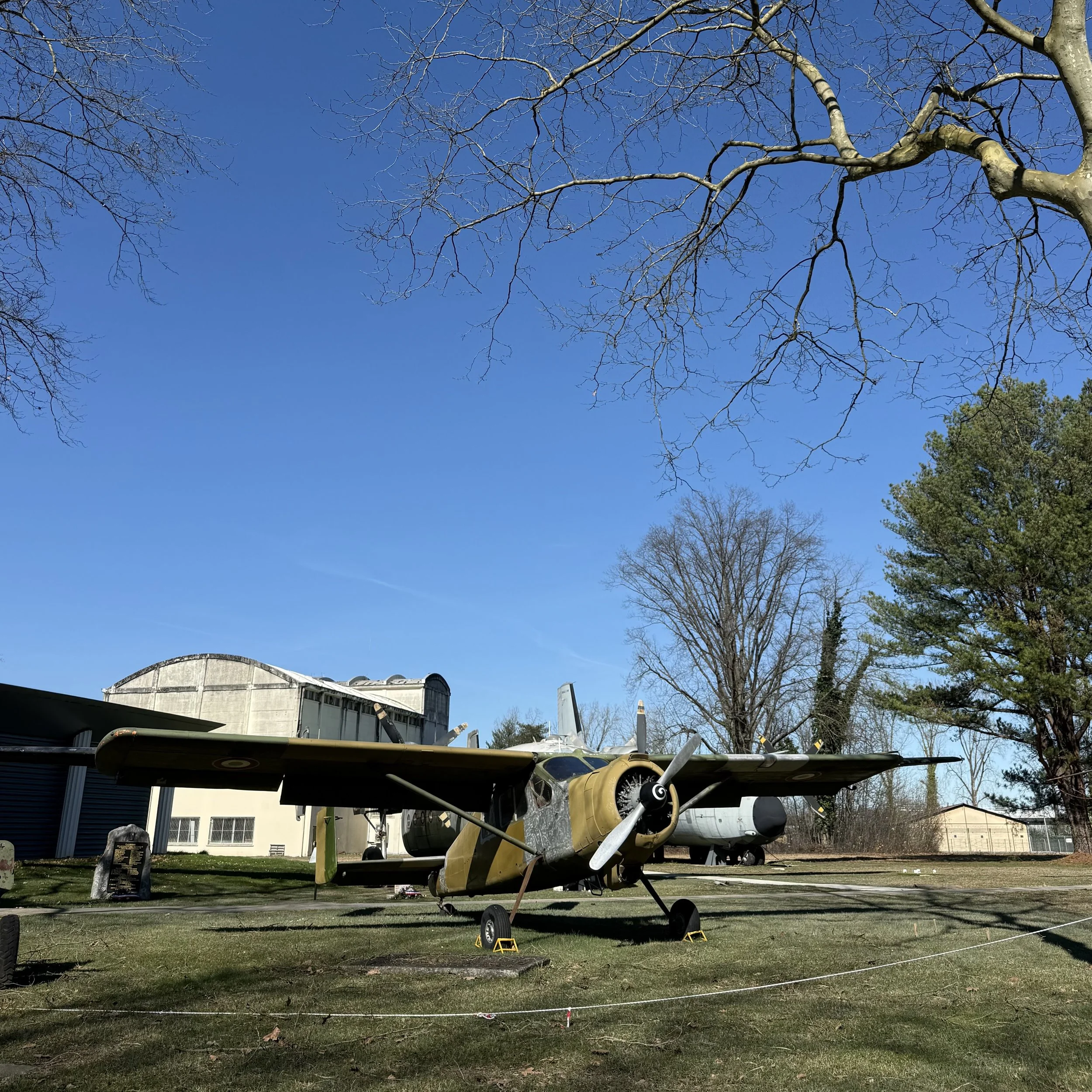
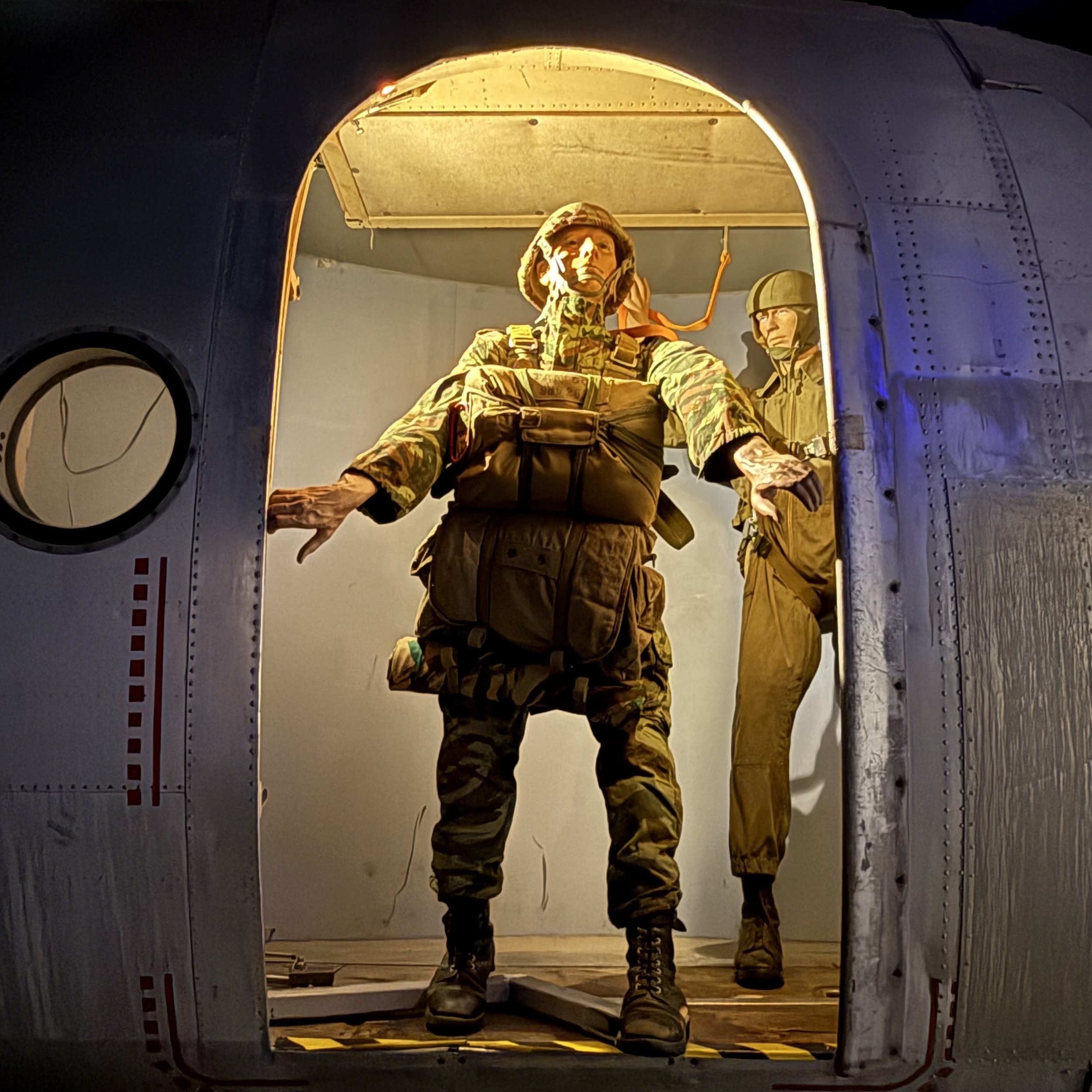
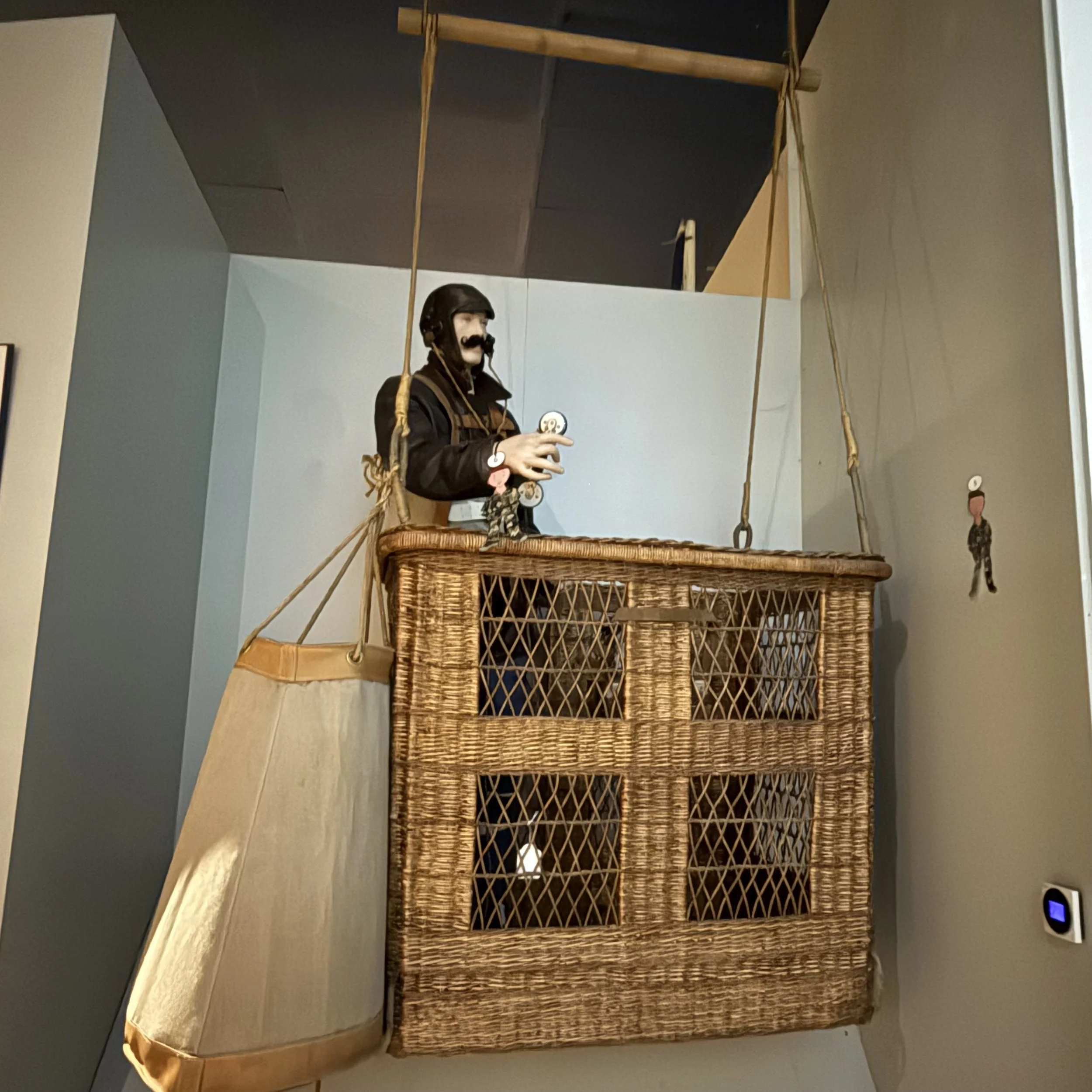
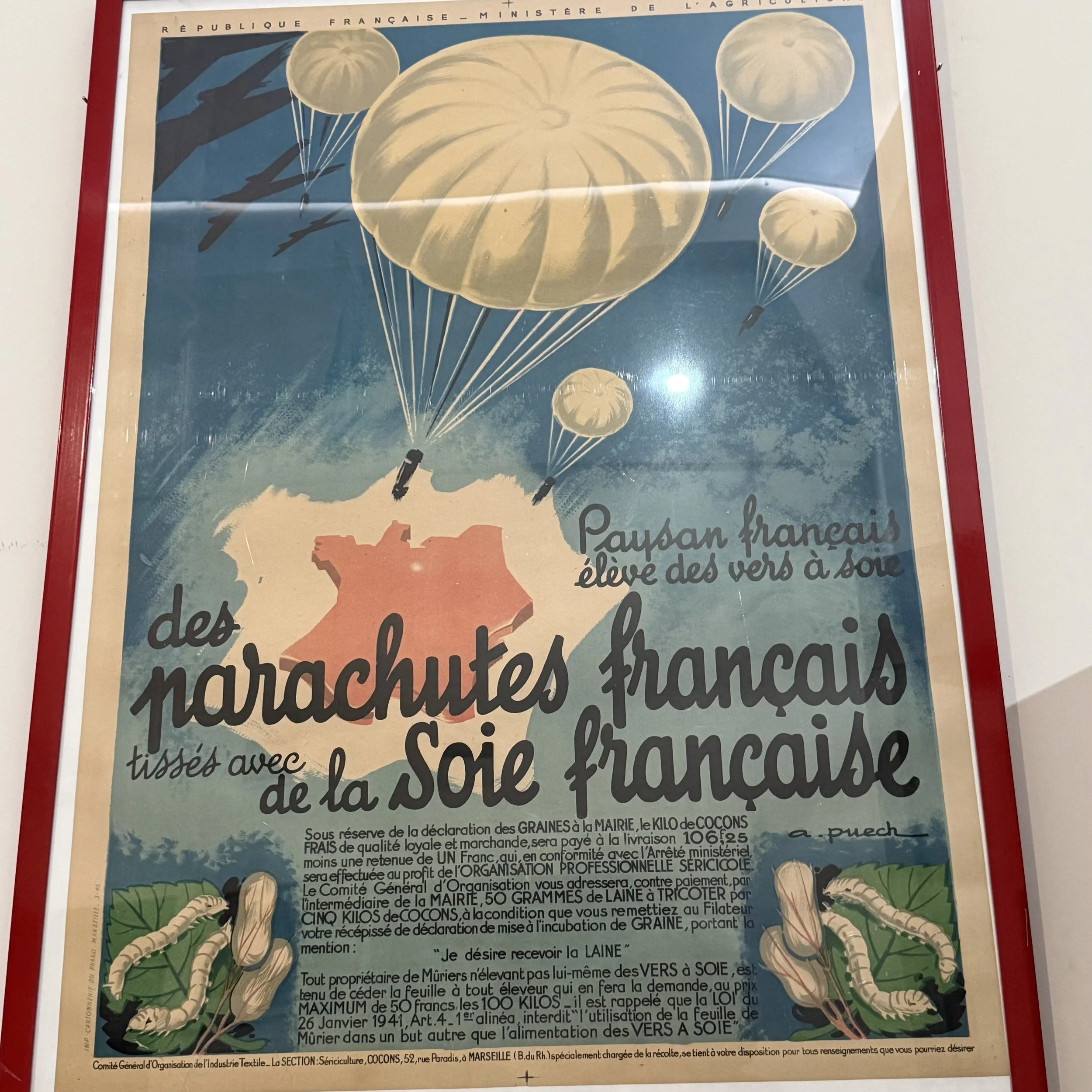
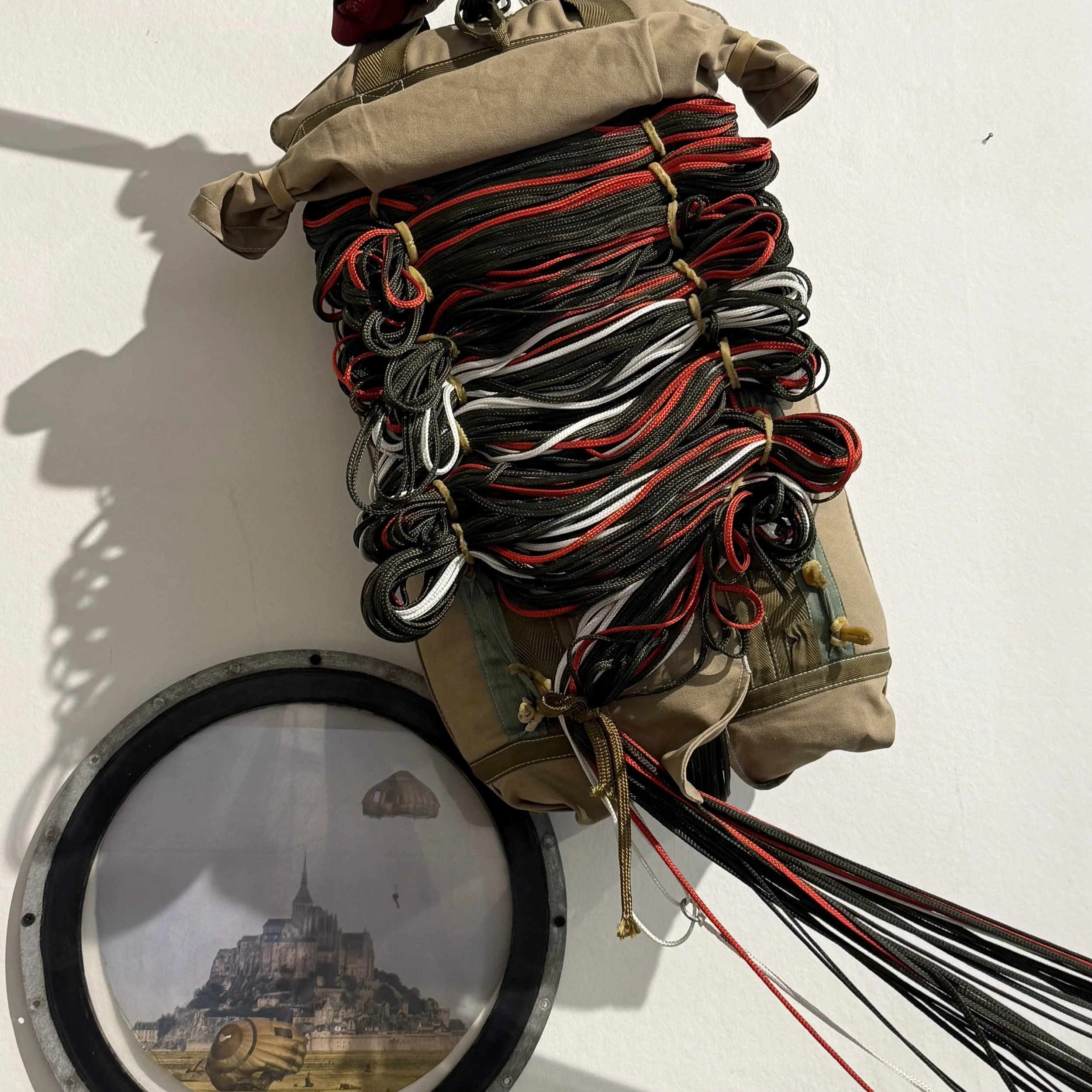
Slideshow above: A visit to the Paratrouper Museum in Pau.
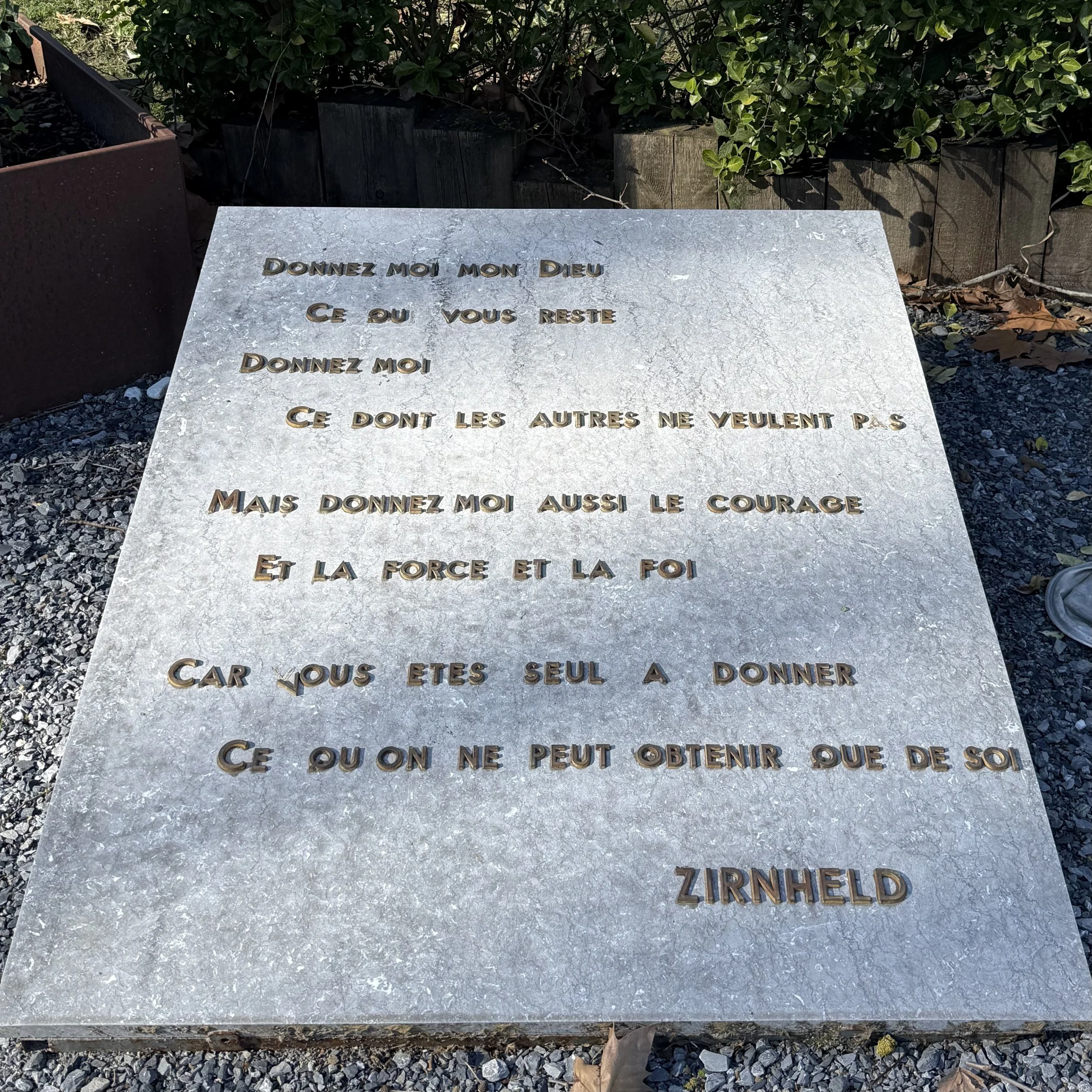
Give me my God
what remains of you
Give me
What others don’t want
But give me the courage,
and the strength, and the faith
because you alone can give
what can only be obtained from oneself.
André Zirnhled
Memorial Above: Excerpt from the Paratroopers Prayer, written in 1938 by André Zirnheld (March 7, 1913 – July 27, 1942). He was a Free French paratrooper and member of the Special Air Service during World War II, famous for being the first French paratrooper officer killed in action and for his poem. He was awarded the title of Companion of the Liberation.
Asterisk: United States Parachuting Association (USPA)
Footnotes:
(1) “Histoire de L’Aeroclub du Béarn,” from the club’s website https://aeroclubdubearn.fr/index.php/association-aeroclub-du-bearn/histoire/
(2) École des Troupes Aéroportées, Ministère des Armées and des Anciens Combattants website. https://www.defense.gouv.fr/terre/unites-larmee-terre/nos-brigades/11e-brigade-parachutiste-11e-bp/ecole-troupes-aeroportees
(3) Translated from “Synthèse Historique--Pau et l'aviation: une passion partagée depuis plus de 100 ans” (“Historical Overview--Pau and Aviation: a Passion Shared for 100 Years”). Pau Wright Aviation Society (PWA) website. https://espace-pau-aviation.fr/culture-aéro/pau-et-laviation.html
(4) PWA, ibid.
(5) “Showing the World,” The Wright Brothers Airplane Company, A Virtual Museum of Pioneer Aviation website. https://www.wright-brothers.org/History_Wing/Wright_Story/Showing_the_World/Showing_the_World_Intro.htm
(6) Parks, Dennis, “Getting Airborne: Early Flight Training.” Gerneral Aviaiton News website, March 21, 2013. https://generalaviationnews.com/2013/03/31/getting-airborne-early-flight-training/
(7) Levinson, Rick. “Risk Taking and Personality,” the Journal of Personality and Social Psychology, 1990. https://www.academia.edu/60472097/Risk_taking_and_personality
(8) Villines, Zawn. Good Therapy, “The Pschology of Risk Taking.” May 7, 2013 https://www.goodtherapy.org/blog/risks-adrenaline-benefits-neuroticism-0418137
(9) YouTube podcast: Michele Obama and Craig Robinson, Higher Ground Productions., December 10, 2025. https://www.youtube.com/watch?v=RIdoTICe58k
(10) Keyes, Chris. “Anderson Cooper: the Full Interview,” Outside website March 8, 2010. https://www.outsideonline.com/adventure-travel/destinations/caribbean/anderson-cooper-full-interview/
(11) Popak, Moche. “How an Extreme Athlete Overcomes Fear,” Common Denominator Podcast. Interview with Will Gadd. https://www.youtube.com/watch?v=R0PzT42Mqbk
(12) Willig, Carla. “A phenomenological investigation of the experience of taking part in 'extreme sports.’” National Library of Medicine. July 2008. https://journals.sagepub.com/doi/abs/10.1177/1359105307082459
(13) Culture Partners, “5 Wildly successful Entrepreneurs Reveal How Risk Taking Propelled Their Careers” November 20, 2018. https://culturepartners.com/insights/5-wildly-successful-entrepreneurs-reveal-how-risk-taking-propelled-their-careers/
(14) Culture Partners, ibid.
(15) “entrepreneursonig” website, Interview: Steve Jobs. From Instagram archives. https://www.instagram.com/reel/DUme7DXDzEu/
(16) “entrepreneursonig,” ibid.
(17) Parks, Dennis (Curator Emeritus of Seattle’s Museum of Flight.) “Fliers or Liars,” General Aviation News. May 9, 2011. https://generalaviationnews.com/2011/05/09/fliers-or-liars/
(18) “entrepreneursonig,” ibid.